
Introducing ... b(l)og
- creative explorations of bogs, moors and other magical mossy places

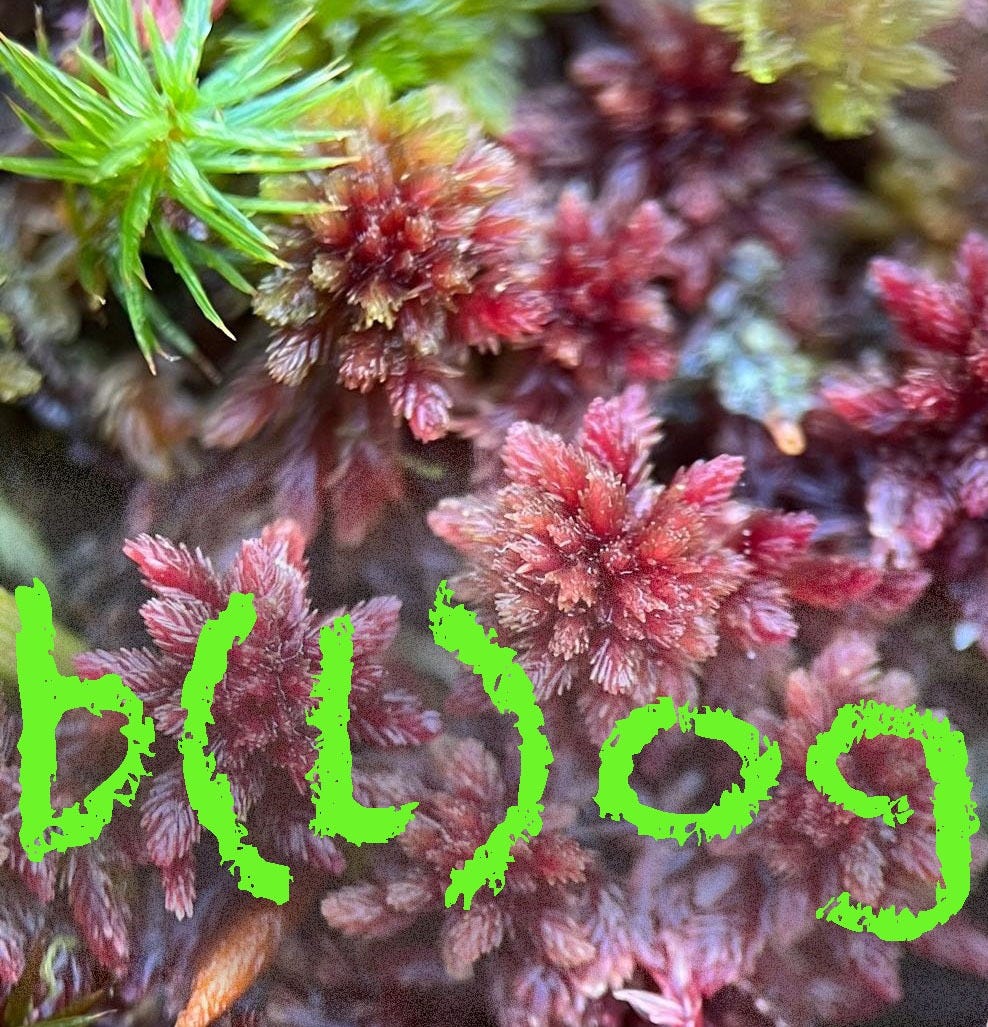
Welcome! This is the first post of b(l)og: a monthly exploration of bogs, moors and other magical mossy places, written by novelist Anna Chilvers and poet Clare Shaw, both of the Calder Valley. As passionate bog enthusiasts, we will examine their extraordinary ecology, fascinating folklore and haunted histories. And as writers, we’ll consider how their unique features might lead us into new ways of writing, even new ways of living.
The Calder Valley cuts through the expanses of South Pennine uplands. Its steep slopes and woodlands, the tight terraces and converted mills stand in sharp contrast to the sweeping horizontals of the moors. Perhaps it’s the contradictions of this landscape which attract so many artists and writers.
We first started working together because of these moors – and specifically because of the blanket bogs which cover them. For the last two years, Anna and I curated, funded and edited “The Book of Bogs” - an anthology featuring 49 writers, including Robert Macfarlane, Alys Fowler, Amy Liptrot, Pascale Petit and other incredible writers of place and nature, with our moors right at its centre. We did this because of the existential threats facing our own moor and other peatlands across the UK - and beyond - which, for centuries, have been drained, damaged and developed almost out of existence.
Our aim has always been to introduce people to these wonderful, overlooked landscapes – whilst there is still time to love , enjoy, and protect them. But over the last two years we’ve realised that as writers, our love for bogs extends even deeper than their peat. We love them for the lessons they teach us – how to look closely, to move deliberately, to be careful and still. To see what cannot be seen, to love what is unloved, to walk into dangerous places, to live beyond boundaries and binaries. To sit calmly with uncertainty, to find beauty in dark waters.
And so an idea emerged - a monthly b(l)og in which we will share and develop our fascination with these landscapes in conversation with readers and writers, with other lovers of nature and place who want to explore how landscape can inform our writing, and perhaps transform our living.
Whilst all subscribers will be able to read our articles for free, paying subscribers will, for £4 per month, have access to writing prompts, writing exercises and other bonus content, including quarterly live online events. Subscriptions begin at £4 per month, or £40 per year.
For the next eight months, b(l)og will be accompanied by “Writing Bogwise” – a monthly series of online writing workshops: for more information available click here. Expect … nature writing which strays from the path, stories which explore dark waters, memoir which isn’t afraid to get dirty. Expect deep peat and deep time, fluidity, the art of listening, close observation, staying still. Expect wild places and wild writing; literature without borders and binaries. Expect to find meaning in moss - and lots of it. Expect to embrace the uncertain, the unwanted, and much, much more.
The first time you set out across that expanse, you stick to the paths - the ways people have gone before, where the ground looks firm and safe. You don’t leave that path. There is one place where it crosses boggy ground, but the weather has been fine recently, and you can see where others have trodden. You know if you came here after heavy rain it would be a different picture, and you might turn back.
The next time, you go with someone else; someone who knows the bog and how to traverse it. Though you mostly stick to the paths, they take you out into a wet area where you have to step around pools. They show you which hummocks to stand on, which type of grass, that heather is usually safe underfoot, and that some types of sphagnum – deep and vibrant - suggest wetter ground. You leave invigorated and confident.
Over the next few weeks you return many times, and your confidence grows. You learn that stepping from hummock to hummock is scary but exciting. After each trip, it feels like you have done something good, learned something about yourself. You feel like somehow, slowly, you are growing. You go with another friend, someone who knows the species which live on the bog, who tells you to look up close. You look at the tiny transparent green of moss leaves through a hand lens, you consider the tardigrades in their invisible millions. They ask you to listen: you hear wind and curlews, lapwings. The fat buzz of bees, your own heart beating. You slip and end up to your thighs in brown water. You’re wet and you’ll need a bath when you get home, but it’s actually OK. You both laugh. You wonder what it would be like if this happened when you were on your own.
And you realise - it would be uncomfortable, possibly frightening, but you would still be OK.
You learn about peat and what it holds. Beneath you are layers of history - objects and bodies and sequestered carbon which could rise to the surface in certain conditions. The bodies held in the memory of peat are perfectly preserved. They look alarming but they are harmless, and they are rich with information. You visit museums to view these bodies. You read about their previous lives – and they teach you about your own. You learn that memory can hold much intact, but that it can’t hurt you.
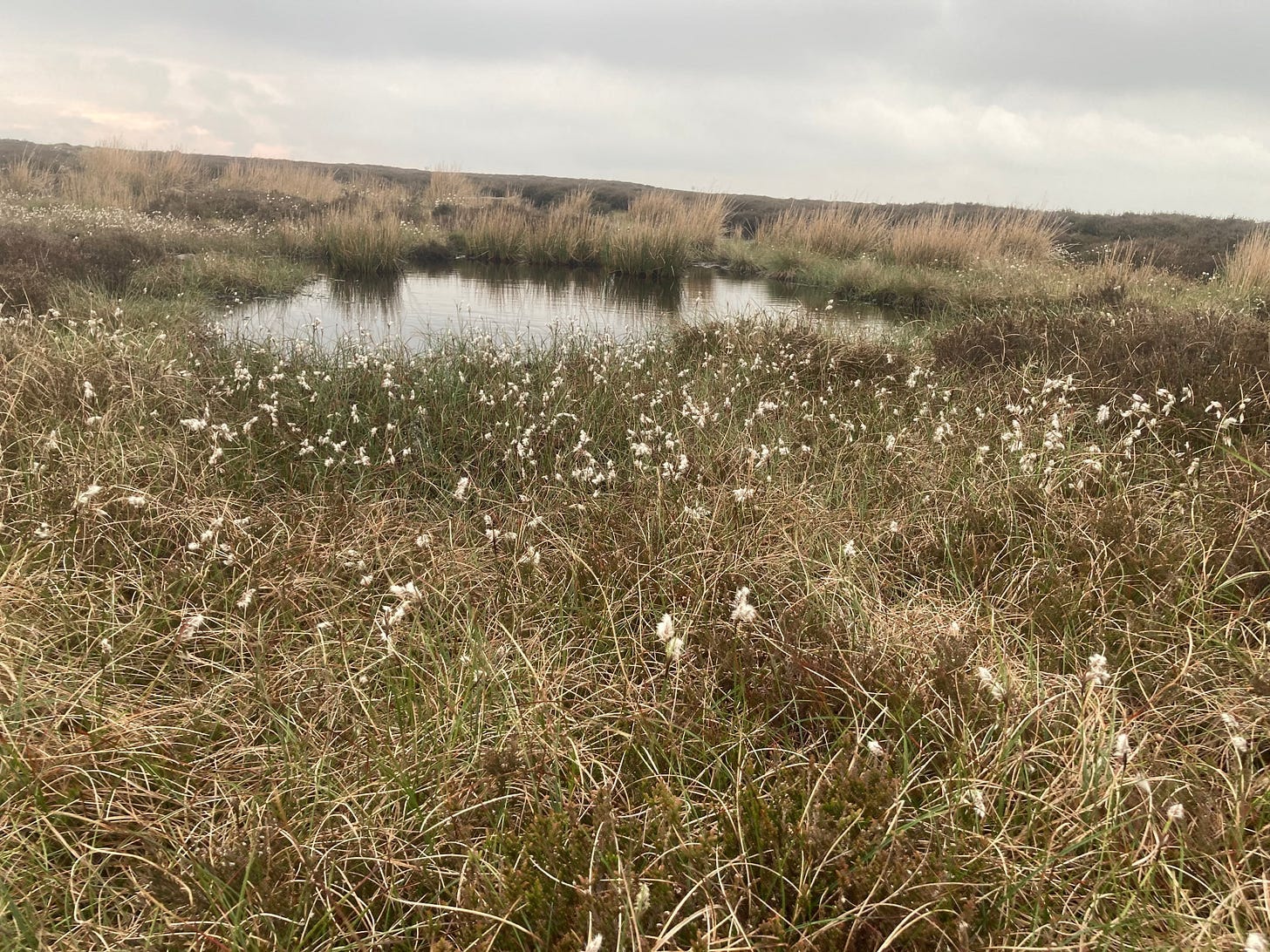
You learn that there are parts of the bog which are treacherous and shouldn’t be approached without expert guidance. You learn that carving up the peat will release too much carbon, and make it hard for you to breathe. You learn to love the smell of the peat; dip your hands into bog puddles, palms against wet peat; look at the brown stains on your hands. Skylarks sing. You watch swathes of cotton grass waving in the breeze.
Your writing is now brave and strong. It zooms in to detail and out to wide landscapes. It isn’t afraid to get dirty, to dive in, to leave the path. It is full of sensory detail, hidden memories and the breath of wind. You are writing bogwise.
We aim to publish a new article each month, so look out for the next one on 1 April.
i love bryophytes
This sounds wonderful. I'm looking forward to reading more, and possibly upgrading when I can.